
Famco Chimney Sweep in La Jolla: A Homeowner’s Guide
If you searched “FAMCO chimney sweep La Jolla,” you’ve landed on a manufacturer’s brand name, not a service provider. FAMCO makes venting caps, dampers, and duct fittings. What you actually need is a chimney sweep who knows how to specify and install those components correctly for your specific system. That distinction matters more than most homeowners realize, especially in a coastal environment like La Jolla where salt air punishes cheap hardware within a few seasons.
Here’s what we’ll cover: what FAMCO actually manufactures, why component quality changes how long your repair lasts, how to evaluate whether a sweep is installing the right hardware for your appliance, and what a proper venting cap specification looks like on a La Jolla roofline. If you’d rather skip the research and just get someone out to look, call (833) 952-1418 for a free estimate.
What FAMCO Actually Makes (and What It Doesn’t)
FAMCO is a manufacturer of HVAC and venting components. Their catalog includes roof caps, wall caps, dampers, duct fittings, and termination hardware for a range of exhaust systems. They don’t clean chimneys. They don’t inspect flues. They don’t repair masonry. They make the metal components that go on top of, inside, and around venting systems.
This is the information gap driving your search. You typed in a brand name followed by “chimney sweep” and a city, expecting to find a local service company. What you found is likely a mix of supply-house pages, manufacturer spec sheets, and contractor sites that happen to reference FAMCO products. The search intent behind “FAMCO chimney sweep La Jolla” is really “I need chimney or venting work in La Jolla, and I’ve heard FAMCO hardware is good.” That’s a reasonable starting point. But the brand on the box is only part of the story.
In our experience serving La Jolla, what separates a lasting repair from a callback in two years is rarely the brand name alone. It’s whether the person installing it understood why that component was chosen, how it fits the existing system, and how it will behave in this specific microclimate. A FAMCO cap installed without regard for prevailing wind direction or appliance draft requirements is still a problem waiting to show itself.
Why Component Quality Changes Everything in Coastal Salt Air
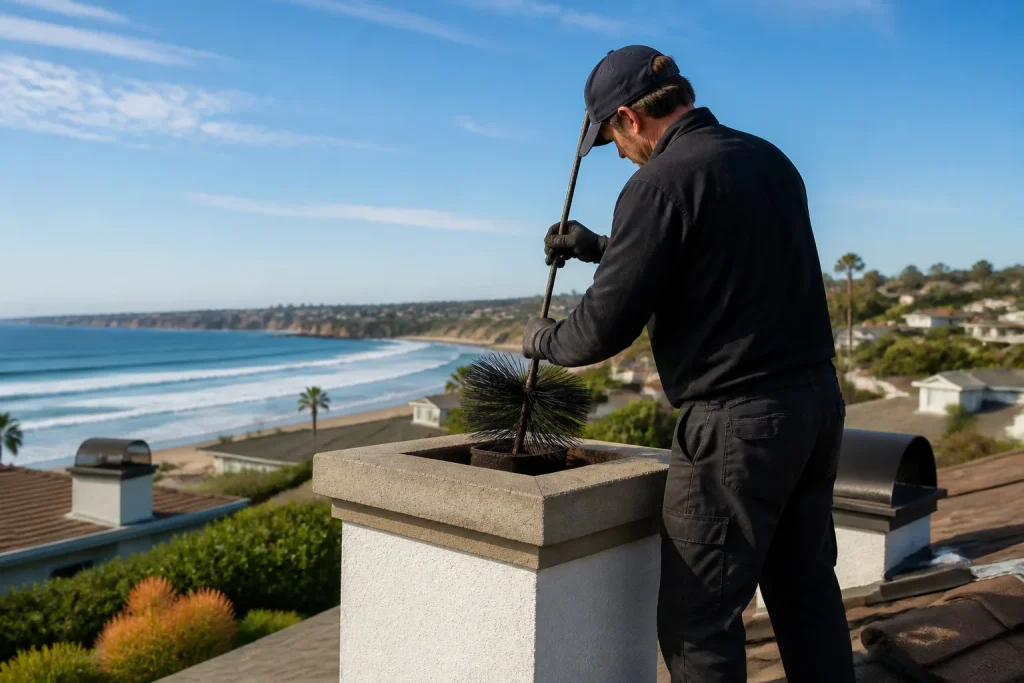
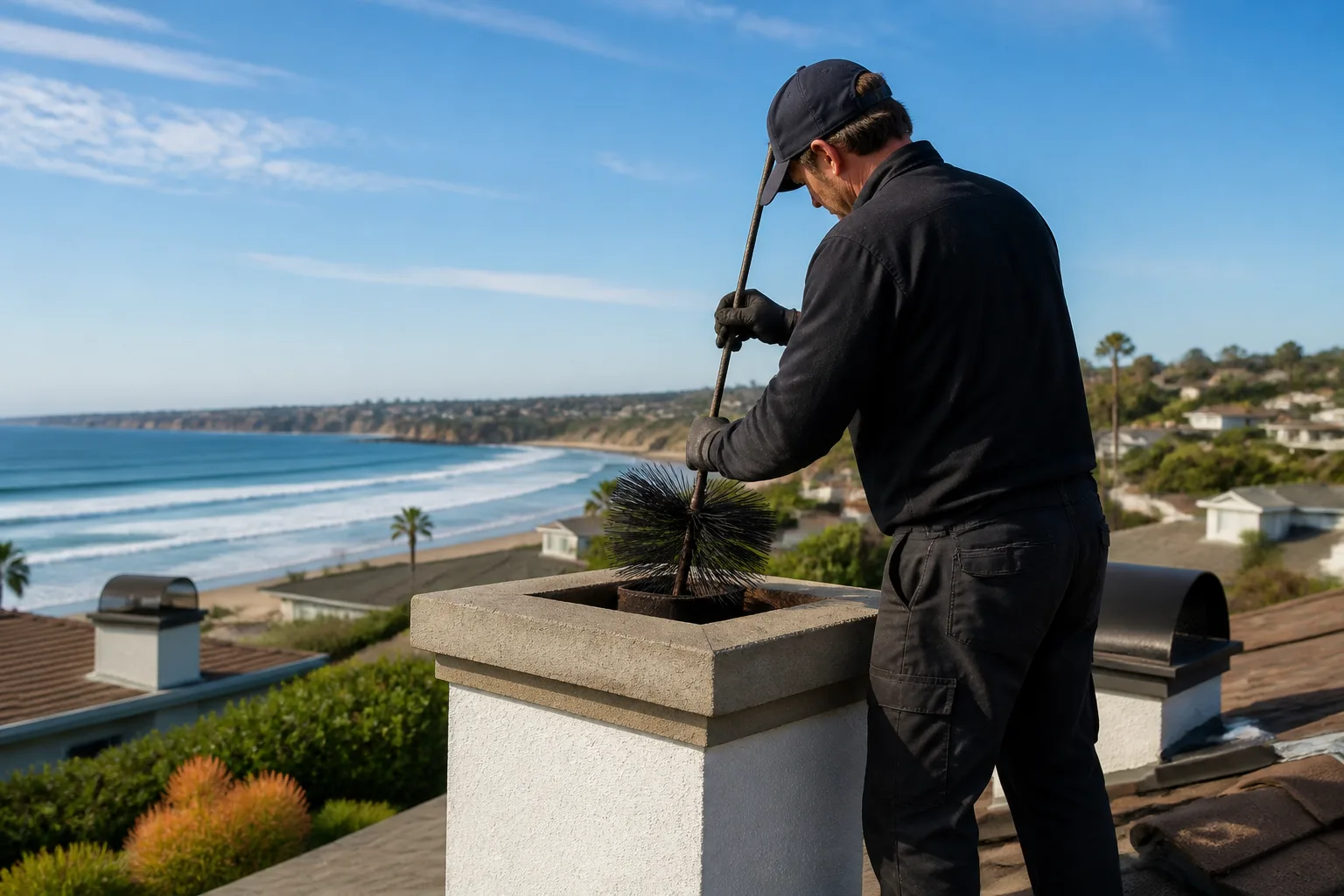
La Jolla’s coastal environment is genuinely hostile to venting hardware. Morning marine layer means sustained moisture. Salt-laden air accelerates corrosion on galvanized steel and even some lower-grade stainless alloys. A commodity chimney cap from a hardware store – the kind that costs twenty dollars and comes in a plastic clamshell – will show rust staining within eighteen to twenty-four months on many La Jolla homes. By year five, you’re looking at a cap that’s structurally compromised and no longer doing its job of keeping rain, birds, and downdrafts out of your flue.
This is why we stock and install manufacturer-grade components from FAMCO, Olympia Chimney, and Copperfield rather than whatever is cheapest at the big-box store. These are the same materials specified in chimney industry standards, designed for decades of exposure rather than a few seasons. The cost difference on a cap might be sixty to a hundred dollars. Spread across ten or fifteen years of service life, that’s trivial. And it means you’re not paying for another rooftop visit in three years because the cheap cap rusted through.
The same logic applies to dampers. A top-sealing damper with a properly fitted silicone gasket keeps conditioned air from escaping up the flue year-round. A budget throat damper with a warped frame or corroded hinge does nothing for energy efficiency and can actually make drafting worse. When we evaluate venting hardware for a La Jolla home, we consider the distance from the coast, the home’s elevation, and the typical wind exposure. Where you are in La Jolla – the Village, La Jolla Shores, Muirlands, or up toward Mount Soledad – genuinely changes the calculus.
How to Evaluate Whether Your Sweep Is Installing the Right Hardware
Here’s a checklist we give homeowners who want to know if their chimney contractor is doing right by their specific system. Not every home needs every item, but a competent sweep should be able to answer these questions clearly.
- What type of appliance vents through this flue? A wood-burning fireplace, a gas insert, and an oil furnace all have different draft characteristics and temperature profiles. The cap and termination hardware need to match. A cap designed for a high-temperature wood flue is overkill on a gas insert. A cap intended for a low-temp gas system may not hold up if you ever burn wood. The right answer depends on what’s actually connected.
- What’s the flue liner material and condition? Stainless steel liners, clay tile, and cast-in-place flues each accept different connection methods. If your sweep can’t tell you what kind of liner you have before recommending hardware, that’s not a diagnosis, it’s a guess.
- Why this cap and not a different one? If the answer is “this is what we carry on the truck,” you’re not getting a specification. You’re getting inventory. A FAMCO cap with a screened top is right for some homes. A Copperfield cap with a draft-increasing design is right for others. There’s a reason. Ask for it.
- How will this hold up to salt air? In La Jolla, this isn’t a theoretical question. Ask about alloy grade, finish, and expected lifespan. If the person on the phone doesn’t know what stainless grade the cap is, that’s information, too.
We’ll tell you exactly what we found – and show you. Camera inspection of the flue interior is standard practice on our service calls, and we walk through what we’re seeing with you, not just handing down a list of line items without context. If nothing needs replacing, we say so plainly. Nothing gets recommended without visual evidence you’ve seen for yourself.
What a Proper Venting Cap Specification Looks Like on a La Jolla Roofline
Wind is the variable most people overlook. La Jolla’s coastal bluff exposure and canyon-adjacent neighborhoods create turbulence patterns that vary block by block. A cap that drafts beautifully on a sheltered street in the Village can perform poorly three blocks away where the prevailing wind hits differently.
Here’s what we consider when specifying venting hardware for a La Jolla home:
- Wind exposure and prevailing direction. Some caps are designed to use wind to increase draft rather than fight it. On an exposed roofline with a history of downdrafting in the fireplace, that design difference is the fix. On a sheltered roofline, it’s less relevant.
- Flue diameter and appliance output. A cap that’s too restrictive chokes the draft. A cap that’s too large doesn’t seal effectively against weather. The cap needs to match the flue and the appliance, not just the hole it sits over.
- Spark arrestor requirements. In fire-prone Southern California, spark arrestors on wood-burning flues aren’t optional. The mesh gauge matters: too fine and creosote buildup will clog it between cleanings, too coarse and it won’t arrest sparks effectively. This is a code issue in many parts of San Diego County.
- Bird and rodent risk. La Jolla’s coastal canyons mean pigeons, starlings, and even raccoons will find an uncapped or under-screened flue. A proper cap with the right screening keeps them out. We’ve pulled nests out of more chimneys in La Jolla Heights than we can count, and the typical sign is a sudden lack of draft plus chirping sounds from the firebox.
This is where material-specific expertise matters. Knowing when to spec a FAMCO termination cap versus an Olympia Chimney cap versus something fabricated to fit a unique masonry crown is the difference between a lasting repair and a repeat visit. One-size-fits-all has no place on a La Jolla roof.
The Difference Between a Sweep and a Full-Service Chimney Company
Most chimney sweeps open the door, run a brush, hand you a bill, and leave. If they see a cracked flue tile or a rusted damper or a deteriorated crown, they tell you to call someone else. That’s the business model. Cleaning is profitable. Diagnosis and repair are harder, messier work that requires inventory, equipment, and deeper knowledge. So most companies don’t do it.
That’s not how we’re set up. Our Chimney Sweep in La Jolla service is the starting point, not the whole job. When cleaning uncovers an issue – and in a coastal environment with older homes, it often does – we’re equipped to diagnose and handle the repair in the same call, whether that’s a Chimney Repair in La Jolla or a longer-term liner restoration. Cleaning is step one. We stay to handle what cleaning uncovers.
That repair capability extends to flue restoration options most sweep-only companies can’t offer. HeatShield is a ceramic resurfacing system that can seal and restore deteriorating flue interiors without a full liner replacement. In cases where the original clay liner has cracked but the structure is otherwise sound, HeatShield can be a less invasive, lower-cost repair path than total relining. When the liner is too far gone, DuraFlex stainless flexible liner systems are the answer for full relining of deteriorated or improperly sized flues. Knowing which path applies to your flue is a diagnostic judgment, not a coin flip.
And because we handle Dryer Vent Cleaning in La Jolla as part of the same operation, you don’t need a separate call for the other fire-risk exhaust system in your home. Lint-clogged dryer vents cause thousands of house fires every year. It’s a chimney-related hazard that most chimney companies simply ignore. Your dryer vent is a fire hazard too – we handle both.
When to Call a Pro
If you’re reading this because you searched a manufacturer’s brand name and ended up down a rabbit hole of cap spec sheets and supply-house catalogs, that’s probably a sign. Figuring out which venting components your home actually needs isn’t a weekend project. It requires an inspection of what’s there now, an assessment of your appliance and your exposure, and a recommendation based on what you actually need, not what’s on sale.
Here’s our guidance on when to stop researching and just call:
- You haven’t had a chimney inspection in more than two years. The National Fire Protection Association recommends annual inspection and cleaning as needed. Two years without anyone looking at the flue is enough time for real problems to develop.
- You’re noticing performance issues: smoke entering the room, persistent draft problems, unusual odors from the fireplace even when it’s not in use, or visible rust staining on the cap or crown.
- You’re buying a home in La Jolla with a fireplace or wood stove. Pre-purchase chimney inspections catch problems before they become your problems.
- Your dryer vent hasn’t been cleaned in the past year, and your dryer is taking longer and longer to finish a load.
If any of those apply, call (833) 952-1418. We’ll come out, inspect what’s actually there, and give you a straight answer about what needs doing and what can wait. Estimates are free, and we don’t recommend anything we can’t show you on camera.
The Bottom Line
FAMCO makes quality venting components. They don’t sweep chimneys. What you need is a sweep who understands why component selection matters for your specific home, your specific appliance, and your specific location. In La Jolla’s salt air and coastal wind conditions, that understanding is worth more than any brand name on a box.
Cheap venting hardware fails fast here. The wrong cap design causes drafting problems that make your fireplace miserable to use. And a company that cleans but can’t repair leaves you making two calls for what should have been one appointment. If you’re in La Jolla and you want someone who can inspect, diagnose, and fix what’s actually wrong with your venting system, Chimney Sweep La Jolla offers free estimates. Call (833) 952-1418 and we’ll take a look.
While you’re at it, you can also get details from the Chimney Sweep La Jolla home page if you want the full scope of what we do.
Frequently Asked Questions
No. FAMCO is a manufacturer of venting and HVAC components, including caps, dampers, and duct fittings. They don’t provide chimney sweeping or inspection services. If you searched for “FAMCO chimney sweep La Jolla,” you need a licensed chimney professional who installs FAMCO and other manufacturer-grade components, not the manufacturer itself. Call (833) 952-1418 if you need local service.
A manufacturer-grade chimney cap from FAMCO, Olympia Chimney, or Copperfield typically costs more than a hardware-store replacement, but the parity isn’t close when you factor in lifespan. Expect to pay more upfront for materials and installation that will last a decade or more in coastal conditions rather than a cheaper cap that rusts in two to three years. We provide exact pricing after inspecting your flue and roof access. Call (833) 952-1418 for a quote.
The National Fire Protection Association recommends annual inspection, with cleaning performed as needed. In practical terms for La Jolla homes, most wood-burning fireplaces that see regular seasonal use benefit from annual sweeping. Gas inserts can go longer between cleanings, but the venting should still be inspected annually. A home near the coast that burns infrequently still needs regular inspection because salt air and marine layer moisture accelerate corrosion on metal components. Call (833) 952-1418 to schedule an inspection.
A chimney cap covers the flue opening to keep rain, debris, and animals out. A spark arrestor is the mesh screening around the cap’s sides that prevents sparks and embers from escaping onto the roof. Most modern manufacturer-grade caps integrate both functions into one unit. In fire-prone San Diego County, the spark arrestor components are especially important on wood-burning flues. If your cap’s mesh is torn or clogged, it’s not doing its job. We carry replacement caps from FAMCO and Olympia Chimney to fit a range of flue sizes and exposure conditions. Call (833) 952-1418 for an assessment.
Written by the team at Chimney Sweep La Jolla, serving La Jolla since 2015.
Need Chimney Cleaning Help?
Call Chimney Sweep La Jolla - licensed & insured, here with fast help in La Jolla.
(833) 952-1418