
Last updated November 2, 2026
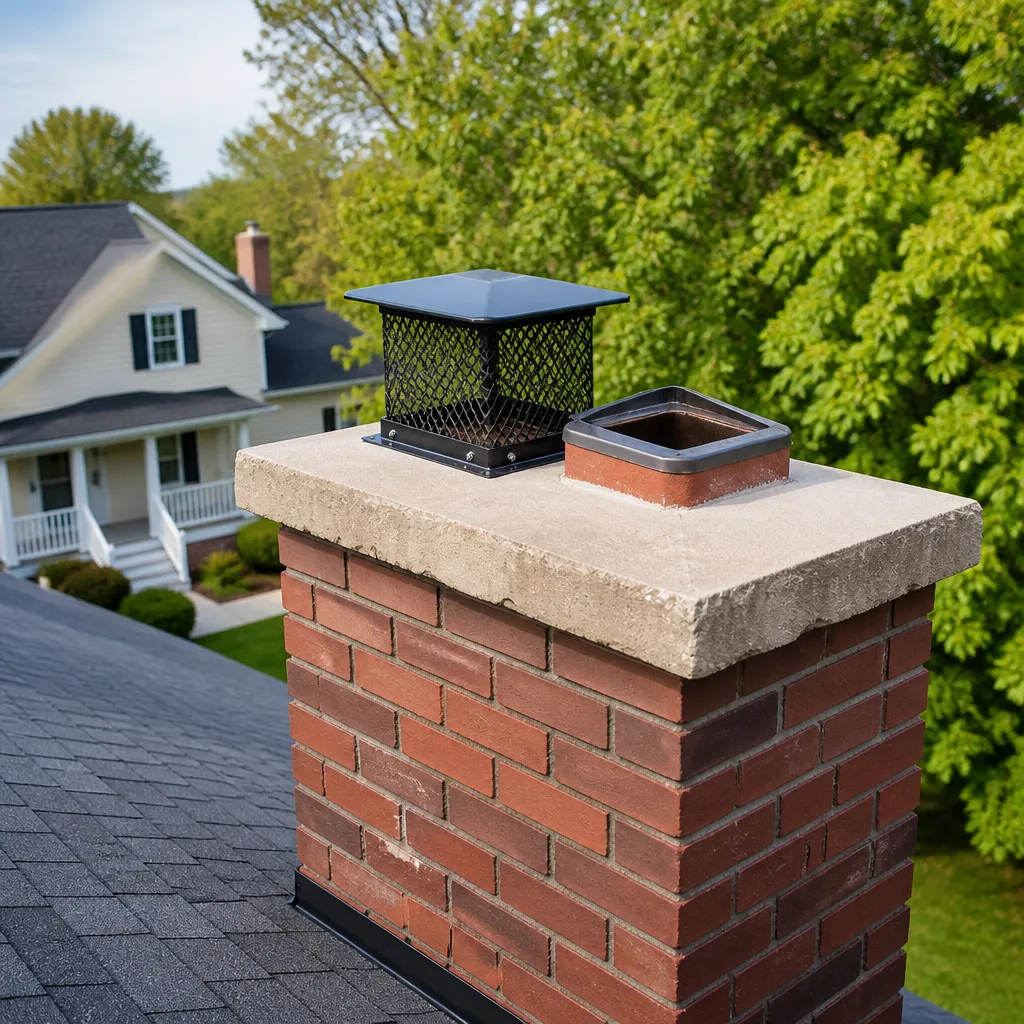 Sweep & inspection
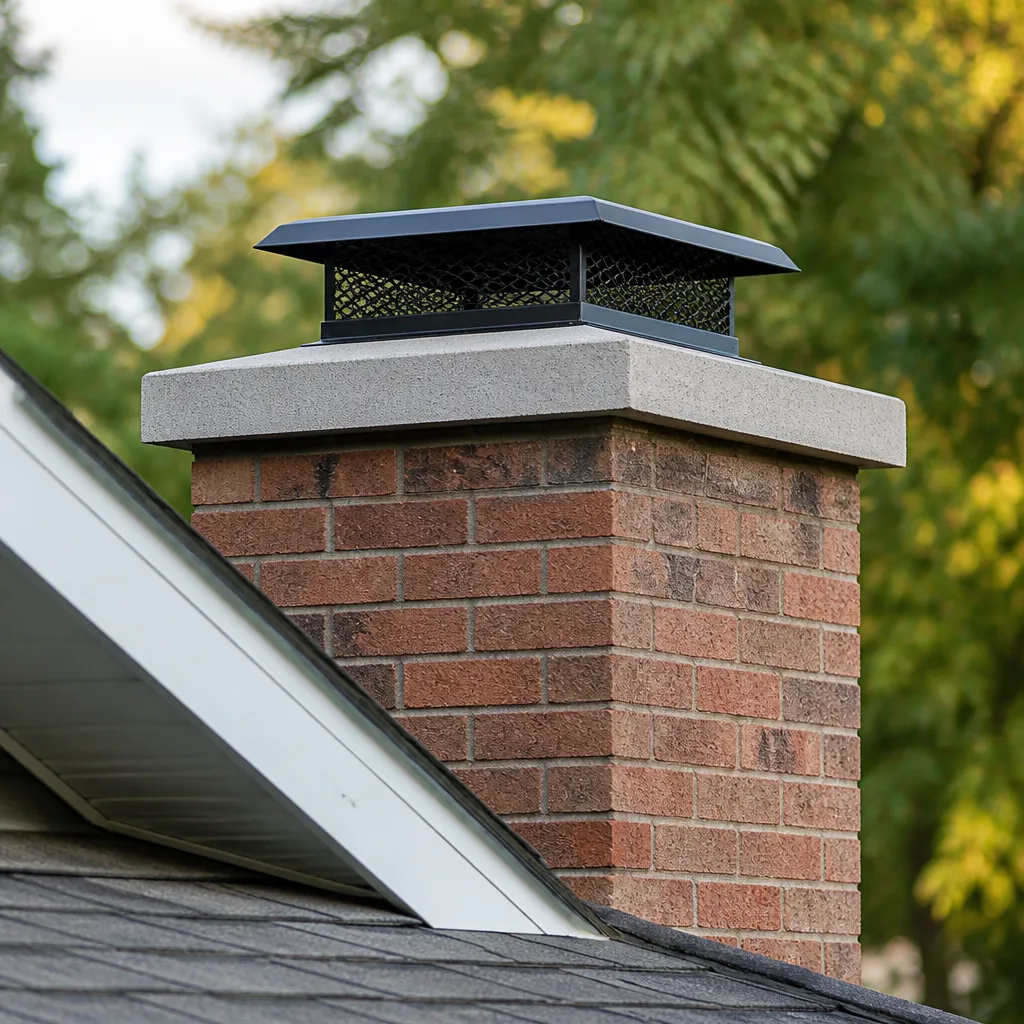 Caps & crowns
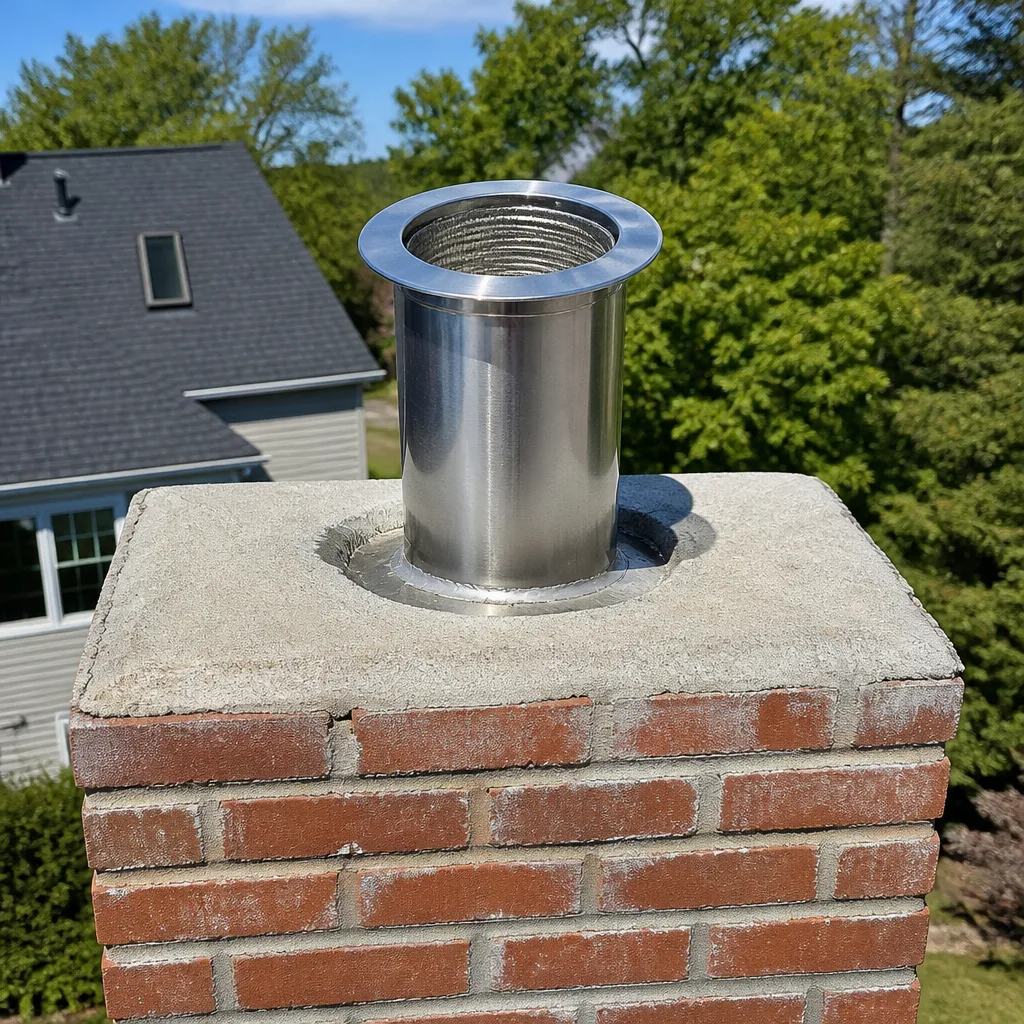 Flue relining
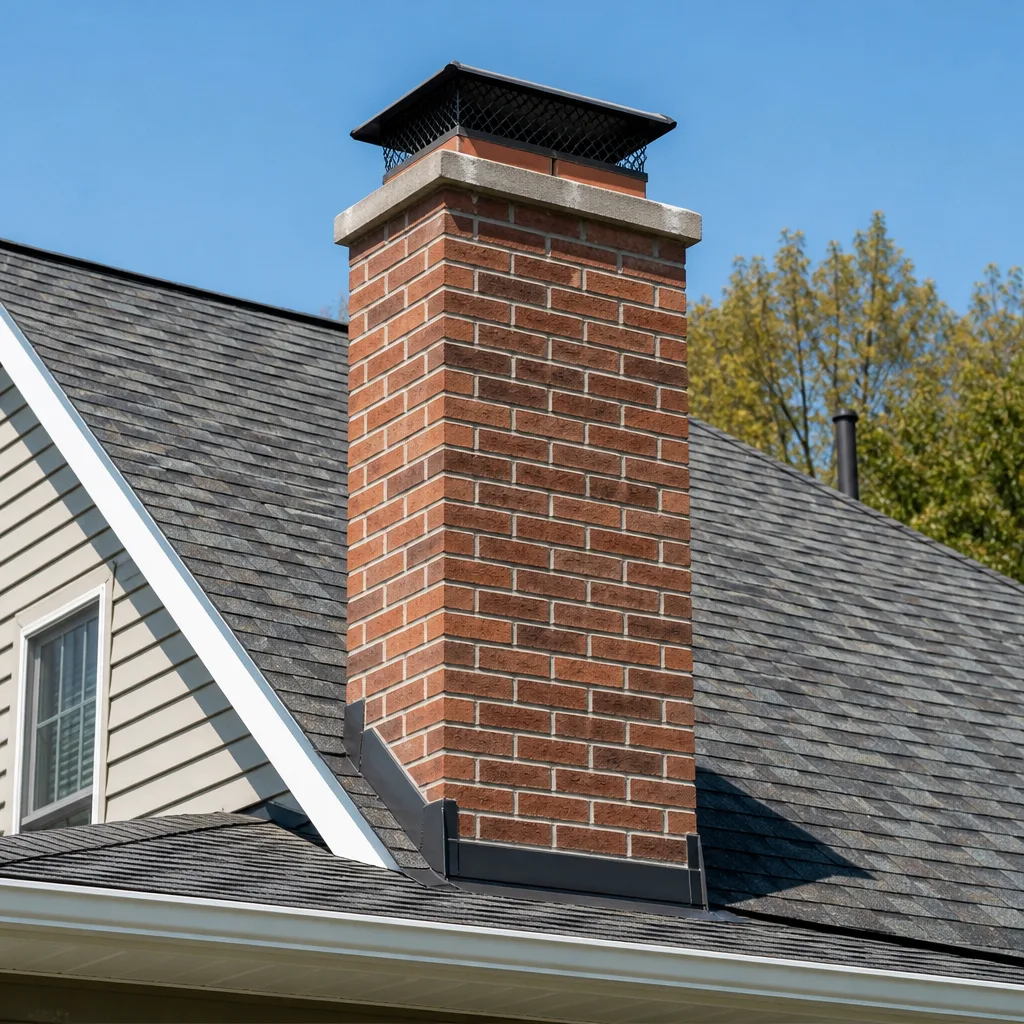 Masonry repair
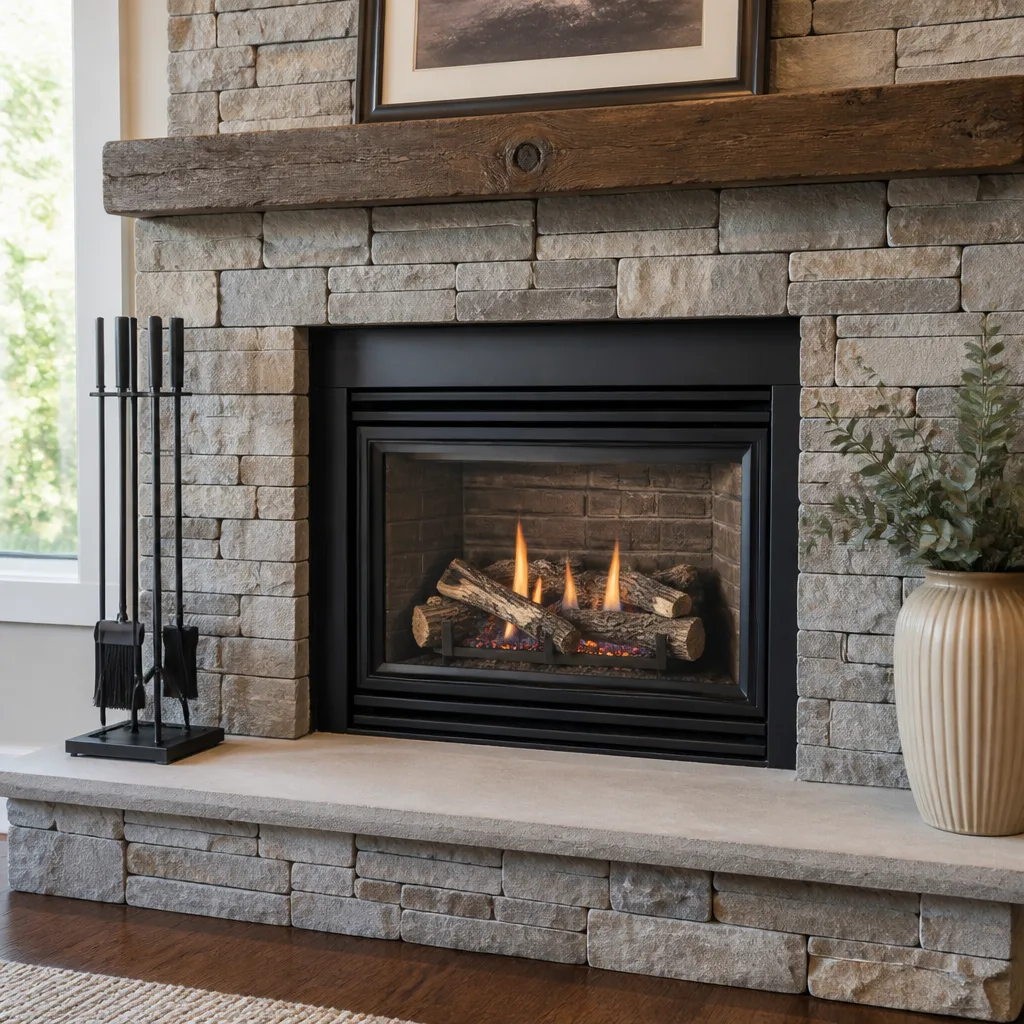 Gas fireplace service
Level 1 sweep and inspection to the NFPA 211 annual standard - flue, crown, cap, and flashing checked and photographed
Chimney sweep logs do not sweep chimneys. They loosen some creosote - which then falls where a brush and vacuum still have to collect it.
Chimney Sweep Maintenance Checklist for La Jolla Homeowners
A chimney crown that looks perfectly sound from the ground can be absorbing enough Pacific moisture to cause interior spalling within two winters. In La Jolla, where salt air, morning marine layers, and sporadic Santa Ana winds each leave their own signature on masonry, the failures that cost homeowners the most are rarely the ones you can spot from the driveway. The four things most La Jolla homeowners never check are the crown, the damper seal, the flue interior, and the chase top, and those are exactly the ones that turn a $250 sweep into a $6,000 rebuild. This Chimney Sweep Troubleshooting: Common Problems and How to Fix Them guide walks you through a maintenance checklist built specifically for La Jolla’s coastal climate and its stock of 1950s through 1980s masonry fireplaces, with pass/fail criteria you can use before you ever pick up the phone.
Styles & brands we work with
- Sweep & inspection
- Caps & crowns
- Flue relining
- Masonry repair
- Gas fireplace service
Quick Answer
A chimney maintenance checklist for La Jolla homeowners should cover seven areas: exterior masonry and crown condition, damper seal and operation, flue interior inspection, smoke chamber and throat assessment, chimney cap and spark arrestor, animal and debris intrusion, and post-weather-event checks after Santa Ana winds and winter rain. Most homeowners can handle a visual exterior walkaround and a damper function test themselves, but any flue interior evaluation, crown repair, or liner assessment requires a professional with camera inspection equipment. The smart sequence is a maintenance sweep every 1 – 2 years for wood-burning fireplaces, with a more thorough camera inspection if the chimney hasn’t been used in over two years.
Table of Contents
- Exterior Masonry and Crown: The La Jolla Moisture Problem
- Damper Seal Check: The Year-Round Energy Leak
- Flue Interior Assessment: What the Camera Reveals
- Post-Santa Ana and Winter Rain Checks
- Animal and Debris Intrusion: La Jolla’s Persistent Guests
- The Dated Maintenance Log: Why Contractors Need It
- Maintenance Visit vs. Inspection: Which Comes First?
- Common Mistakes to Avoid
- When to Call a Professional
- Frequently Asked Questions
- The Bottom Line
Exterior Masonry and Crown: The La Jolla Moisture Problem
La Jolla’s location on a peninsula means every chimney within a mile of the coast sits in a marine layer for part of most mornings. That fog condenses on masonry surfaces, and when it soaks into a cracked crown or hairline mortar joint, the moisture carries salt that accelerates freeze-thaw cycling even though La Jolla rarely sees freezing temperatures. The damage mechanism here is salt crystallization, not ice, and it operates slowly and invisibly until spalling begins.
Here’s your exterior checklist, starting from the ground and working up. You can do this in ten minutes with binoculars or a phone camera zoom.
- Mortar joints at eye level: Run your hand along joints you can reach. If sandy material crumbles away with light finger pressure, the mortar is erosion-compromised and needs repointing. This is common on La Jolla chimneys built before 1970, when softer lime-based mortars were standard.
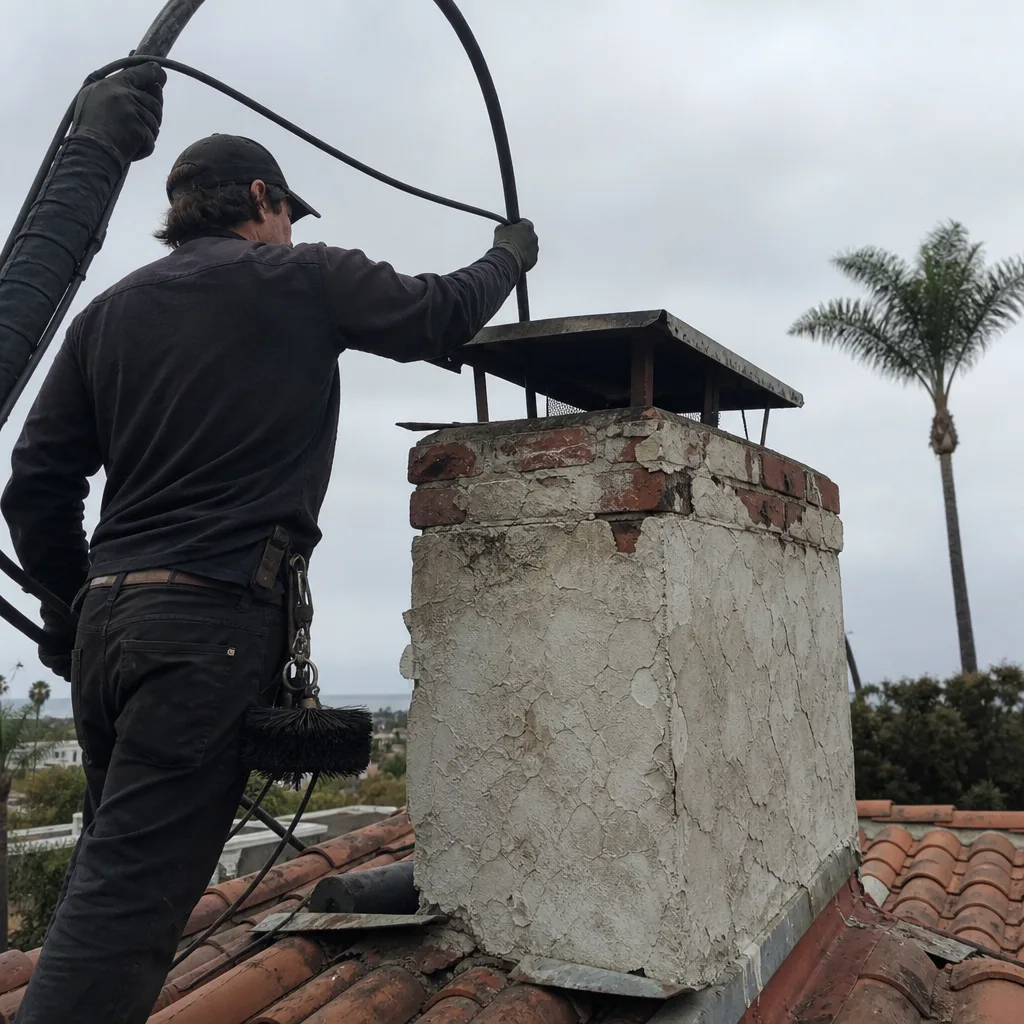
- Crown condition from above: The crown is the cement slab at the very top. Look for hairline cracks wider than a credit card edge. A crack that small, within two winters, channels enough Pacific moisture into the flue system to begin interior spalling. Most homeowners only find this after the damage is done.
- Brick spalling (flaking faces): Check for brick faces that look like they’re peeling in sheets, especially on the side facing the ocean. Spalled brick means moisture has penetrated past the surface and is now pushing outward. This is structural, not cosmetic.
- Efflorescence (white staining): White powdery deposits on brick or stone are dissolved salts left behind when water evaporates. In La Jolla, mild efflorescence on a seaside chimney is common. Heavy efflorescence in a chimney that previously showed none is an early warning of a moisture source change, often a failing crown or missing cap.
- Chase top on prefab units: If you have a manufactured fireplace with a metal chase, look for rust streaks running down the chase sides. The galvanized chase tops installed in the 1980s and 1990s fail at the seams, and once water gets inside, it tracks down the flue and into the firebox.
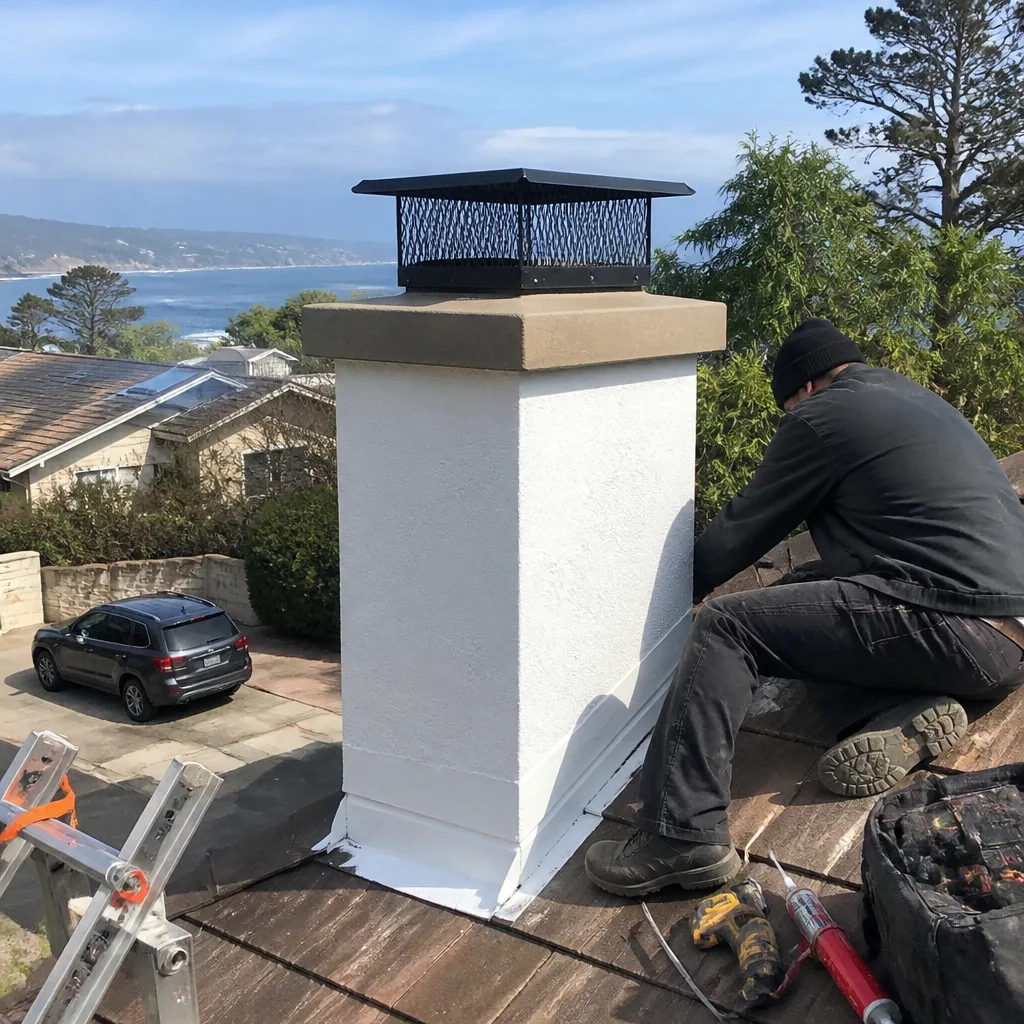
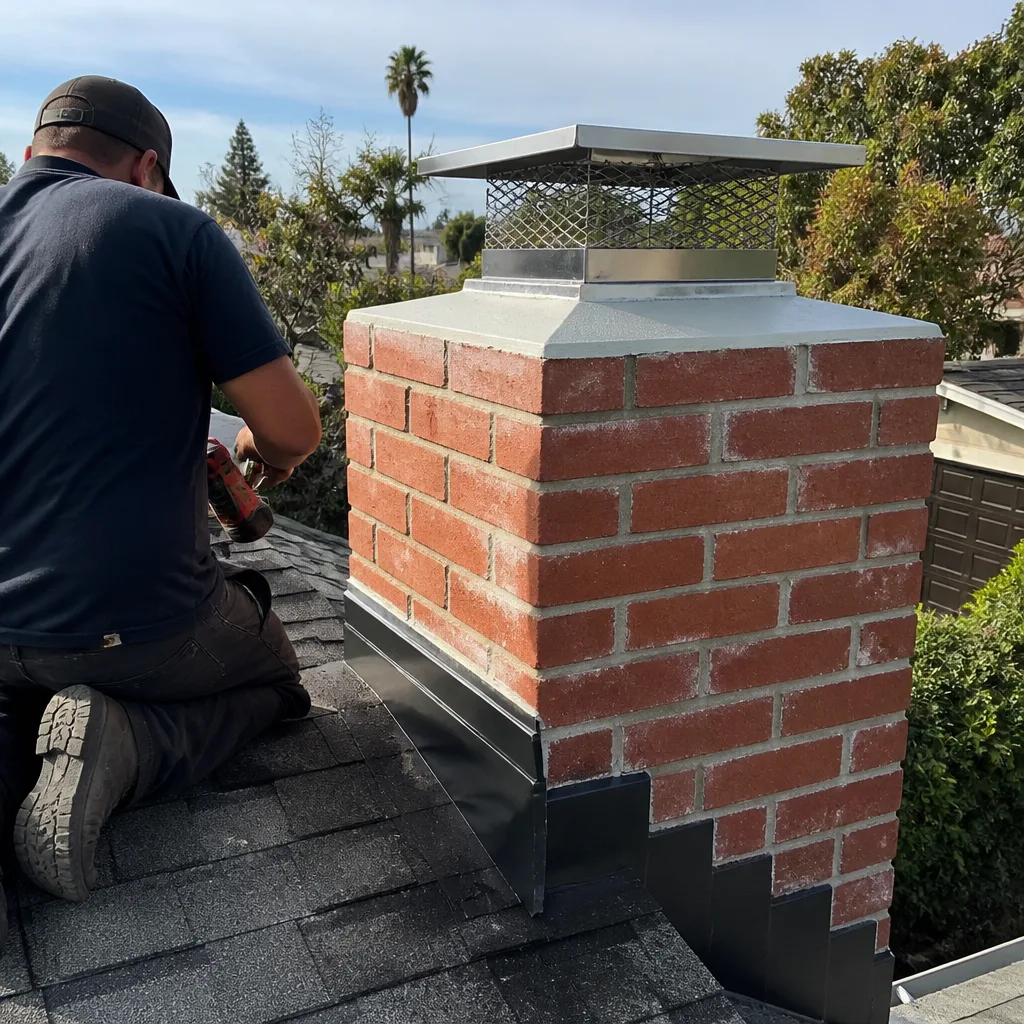
We should be direct about this: the crown is the single most important component most La Jolla homeowners ignore. When we run a camera inspection in a chimney that’s showing interior flue damage, the root cause is almost always a crown crack that went unnoticed for years. A proper crown repair means removing the old material and pouring a new one with a drip edge that sheds water away from the masonry. Patching with a sealant bought at a hardware store typically lasts one season in coastal conditions. The right material matters. In our experience, the repair should be specified for marine exposure, and for crowns, that means cementitious products built with polymer modifiers, not generic mortar mix. We stock and install materials from manufacturers including Gelco and Olympia Chimney for exactly this reason. These are professional-trade products engineered for the coastal environment, not hardware-store substitutes.
Damper Seal Check: The Year-Round Energy Leak
Here’s the part of chimney maintenance that costs La Jolla homeowners money even when they never light a fire. A fireplace damper that doesn’t seal completely is a 24/7 chimney, an open hole from your living room to the sky. Your conditioned air rises and exits, and in summer, the hot air from outside presses down into your home. Most homeowners think about the damper only when smoke rolls back into the room. The bigger problem is the slow, silent draft that runs your HVAC harder every day of the year.
Testing your damper seal takes sixty seconds. Here’s how:
- Do the visual check first: Open the damper and look for visible warping, rust, or gaps where the metal leaves meet the throat frame. If you see daylight around the edges when closed, the seal has failed.
- Use the paper test: Close the damper as tightly as it will go. Light a match or use a stick of incense near the damper opening. If the smoke wobbles or drifts upward, air is passing through. In a properly sealed damper, the smoke stays mostly still.
- Check the felt or gasket (if present): Some dampers in higher-end La Jolla homes were fitted with a gasket or felt seal at installation. If that material is brittle, compressed, or peeling away, it’s time to replace it.
- Note the damper plate position: Even a damper that looks closed can be sitting a quarter-inch proud of its seat due to soot buildup on the pivot. Cleaning the pivot area sometimes restores a proper seal without any parts replacement.
Most original dampers in La Jolla’s older homes are cast-iron throat dampers installed in the 1950s through 1970s. They rust, they warp, and they fail gradually. A replacement top-sealing damper can be installed at the chimney flue top, sealing with a gasket and often cutting the air leakage to near zero. For homes with original dampers still in place and visible rust on the plate or pivot assembly, this is one of the highest-value upgrades you can make to a masonry fireplace, and it pays for itself in HVAC savings over two to three years in a coastal climate with year-round air conditioning demand.
Flue Interior Assessment: What the Camera Reveals
Everything in the flue interior is invisible from the firebox unless you have camera equipment. This is the part of chimney maintenance where guessing becomes expensive. A flue that looks fine from the top and fine from the bottom can be delaminating in the middle where a previous fire burned too hot or a section of clay tile was misaligned during original construction.
In a masonry chimney, the flue is lined with clay tiles stacked and mortared in place. In La Jolla homes built between 1950 and 1985, these tiles are often original, and many are now showing their age. What we’re looking for in a camera inspection:
- Vertical cracks in clay tile lining: These are thermal stress cracks. Heat expands the tile, it cracks, and now combustion gases have a path to the surrounding masonry. This is a repair situation, not a cleaning situation.
- Gaps or misalignment between tile sections: A gap allows heat and gases to escape the flue path. This is common in chimneys that have settled, and in La Jolla, hillside properties on cut-and-fill lots settle over decades in ways that shift chimney geometry.
- Glazing or creosote stage assessment: Stage 1 creosote is fluffy soot that brushes off easily. Stage 2 is granular and requires more aggressive removal. Stage 3 is glazed creosote, a hard, shiny coating that’s concentrated fuel and a genuine fire hazard. A sweep with chemical treatments or mechanical rotary tools is required for stage 3.
- Spalling of the tile surface itself: When moisture from a failed crown meets flue tiles over successive burn seasons, the tile faces begin to flake. Small pieces of clay accumulate at the smoke shelf. This is early-stage liner failure.
When we find flue interior damage, the repair specification depends on what the camera shows. A chimney with minor surface spalling but intact structural tiles may be a candidate for HeatShield resurfacing, which rebuilds the flue interior with a ceramic material without full liner replacement. A chimney with extensive cracking, open joints, or a missing tile section typically needs a full reline, and in those cases we install DuraFlex stainless flexible liner systems. Each case gets its own specification based on what the camera actually shows, and we’ll tell you exactly what we found and show you the images. You should never accept a liner recommendation without seeing the evidence.
Post-Santa Ana and Winter Rain Checks
La Jolla doesn’t get a real winter by most standards, but it gets two weather events that each leave specific damage signatures on chimneys: Santa Ana wind events and the concentrated winter rain cycles that roll through between December and March. Scheduling a visual check after each of these is the difference between catching a problem early and inheriting a bigger one later.
After a Santa Ana event, check for:
- Debris accumulation at the crown: Santa Anas strip leaves and small branches from eucalyptus and pepper trees all over La Jolla. Once that organic material lands on the crown, it breaks down into a mat that holds moisture against the masonry. Remove it before it becomes a moisture reservoir.
- Wind-driven damage to the cap or spark arrestor: We’ve seen caps bent or partially detached after strong Santa Ana events, especially on ocean-facing chimneys in La Jolla Shores and Bird Rock where winds funnel between buildings. A detached cap is an open invitation to birds and rodents.
- Sand and grit forced into the flue: Beach sand carried on Santa Ana winds collects on the smoke shelf. A layer of sand there acts as abrasion on the flue interior during the next burn and can block the throat passage enough to cause smoke backup.
After winter rain cycles, check for:
- Fresh efflorescence on masonry: New white staining after rainfall means water is actively penetrating. Track it. If it appears after each rain cycle, the crown or a mortar joint is the source.
- Water stains inside the firebox: Water tracks down the flue and shows up as dark streaks or pooled residue on the firebox floor. If you see this, the flue is no longer protecting the masonry from moisture. Get a camera inspection.
- Damp smell from the firebox on humid mornings: A musty odor after rain indicates standing moisture somewhere in the flue system. Sometimes it’s as simple as a failed damper gasket. Sometimes it’s a cracked crown. You won’t know without looking.
The pattern here matters more than any single finding. A homeowner who notes fresh efflorescence after every rain cycle and does nothing about it is documenting the progressive failure of the crown in real time. The log we recommend below is built to capture exactly this kind of pattern so that you and your sweep can act on trajectory, not just a single snapshot.
Animal and Debris Intrusion: La Jolla’s Persistent Guests
The animals that move into La Jolla chimneys are not subtle about it, but they also don’t announce themselves until the chimney is already occupied. Swifts, sparrows, and starlings enter from the top and build nests at the smoke shelf or on top of the damper plate. Raccoons favor the chimney chase. Roof rats, common in La Jolla’s canyon-adjacent neighborhoods like La Jolla Farms and Mount Soledad, use chimneys as vertical highways between roofs and attics.
The signs to look for:
- Scratching sounds from the firebox or flue: Usually heard in early morning or at dusk. This is not a cleaning issue. This is a live animal in your chimney, and the correct response is to wait for it to leave and then install a new cap or screen that prevents re-entry.
- Debris falling into the firebox: Bits of nesting material twigs, grass, feathers appearing on the firebox floor means an active or recently abandoned nest above the damper. A nest in the flue is a fire hazard: the material is dried vegetation sitting directly in the exhaust path.
- Swifts at dusk: If you see birds circling and diving at your chimney in the evening, you have a swift colony. Vaux’s swifts and white-throated swifts both use La Jolla chimneys for roosting, and their nests are protected by federal law during active nesting season. You cannot legally remove an active swift nest. The window for removal is after they migrate.
- Droppings on the smoke shelf or firebox: Bird and bat droppings, even dry, carry histoplasmosis risk. You should not attempt to vacuum these yourself without proper respiratory protection. This is a professional removal job.
The permanent solution is a properly fitted cap with spark arrestor mesh, and in La Jolla, that means choosing material that will survive the marine environment. We commonly install caps from Copperfield and Famco, both of which manufacture stainless and copper caps engineered to resist corrosion at coastal exposure. A hardware-store galvanized cap will rust through at the welds within two to three years in La Jolla’s salt air. The brand and material specification matters, and it’s visible every time you look at the chimney from the street. Choose something that’s built for the location, not just something that fits; see our Choosing the Right Chimney Cleaning Brand: A Buyer’s Guide for La Jolla for detailed guidance.
The Dated Maintenance Log: Why Contractors Need It
Most homeowners have no written record of what’s been done to their chimney, and most sweeps don’t have time to establish one during a service visit. The result is that every new contractor starts from scratch, relying on visible evidence alone. A dated maintenance log changes that, and it takes two minutes to start.
What to record, in a simple notebook or a note on your phone:
- Date and type of service: Full sweep, camera inspection, cap replacement, crown repair, damper replacement. Be specific about what was actually done, not just “chimney work.”
- Contractor name and contact: So that three years later you know who did the work if you need to ask a question.
- Findings from the visit: What did the contractor report seeing? Cracks, creosote stage, moisture evidence, animal activity. This is the most valuable entry, because it gives the next sweep a baseline for comparison.
- Parts or materials installed: Brand and product where known. “Copperfield cap installed” tells the next contractor more than “new cap.”
- Burning history since last visit: Approximately how many fires have you burned? Gas insert hours? This correlates creosote accumulation with usage and helps predict when the next sweep should be scheduled.
- Observations between visits: New efflorescence after rain, smoke backup on windy days, unusual odors. These are the early warning signals that would otherwise be forgotten by the time the next service is due.
The log also serves a practical negotiation function. When you call a new company and can say, “The last camera inspection was 18 months ago and showed early spalling in the upper flue tiles,” the conversation starts at a completely different level of specificity. You get a more accurate scope of work, and the contractor can’t reasonably recommend replacement of something that was documented as acceptable 18 months prior. This is the same reason the Chimney Sweep in La Jolla service documentation includes camera images on every inspection: evidence changes the conversation.
Maintenance Visit vs. Inspection: Which Comes First?
People ask us this question more than any other, and the answer depends on one variable: how long has the chimney been dormant?
If you’ve used your fireplace within the last two years and it’s been regularly maintained, a maintenance sweep is the right call. We clean the flue, remove creosote and debris, check the damper operation, inspect the cap from the roof, and do a visual assessment of the firebox and smoke chamber. If we see anything that warrants a closer look, we’ll tell you and show you.
If the chimney hasn’t been used in over two years, or if you’ve never had it inspected since purchasing the home, start with a full inspection that includes a camera evaluation of the flue interior. Here’s the reasoning: a maintenance sweep removes creosote, but it doesn’t tell you whether the flue tiles are cracked, whether a past chimney fire damaged the liner, or whether the crown is actively leaking into the masonry. Sweeping a chimney with a failed liner doesn’t repair the liner, and it may temporarily hide the evidence that a camera inspection would have caught. In our experience, the most expensive repairs in La Jolla come from chimneys that were swept on schedule but never inspected with a camera.
If you’re unsure which category you’re in, call and describe your usage history. A good company will tell you honestly which service you need first, and that’s exactly how we operate at Chimney Sweep La Jolla home. We’re not going to sell you an inspection you don’t need, and we’re not going to skip one you do.
Common Mistakes to Avoid
- Ignoring a cracked crown because it’s “not that bad.” Every crown crack is that bad in La Jolla’s moisture environment. The crack that’s been there for three years has been channeling water into your flue system for three years.
- Skipping the damper check because you don’t burn often. The damper affects your energy bill every day, whether the fireplace is used or not. A failed damper seal costs you money in July and August just as much as in January.
- Using a hardware-store chimney sweep kit from a big-box store. A brush on a drill cleans the surface of the flue, but it doesn’t assess what it cleaned. You’ll know the flue is no longer coated in creosote, but you won’t know whether the tile behind that creosote is cracked, spalling, or already failed.
- Waiting until you smell smoke or see staining to make the call. By the time a problem announces itself, the repair is almost always more extensive and more expensive. The whole point of maintenance is to act before the failure becomes visible.
- Assuming a gas fireplace needs no maintenance. Gas logs and inserts still exhaust combustion gases through the flue, and venting systems still accumulate corrosion and blockages. A gas fireplace that hasn’t been inspected in years deserves the same attention as a wood-burning one.
- Treating the dryer vent as a separate problem. It’s not. A clogged dryer vent is a documented fire risk, and in La Jolla homes where the laundry room is often a converted closet far from an exterior wall, the vent run is long and angled, making it more prone to accumulation. We handle Dryer Vent Cleaning in La Jolla as part of the same service philosophy: inspect, clean, and fix what cleaning uncovers.
- Letting multiple years pass between sweeps because “we hardly use it.” Infrequent use doesn’t mean the chimney is inert. It’s still exposed to salt air, marine moisture, animal intrusion, and Santa Ana debris. The schedule should be driven by environment and condition, not just burn count.
When to Call a Professional
Call a professional when the damper won’t seal properly and you’ve confirmed it’s not just soot on the pivot, when you see water staining inside the firebox, when fresh efflorescence appears after each rain cycle, when you hear animal activity anywhere in the chimney chase or flue, when a Santa Ana event leaves visible damage to the cap or crown, and when the chimney hasn’t been camera-inspected in over two years and you plan to burn through the upcoming season. A proper inspection is not a visual glance from the ground. It’s a roof-level assessment plus a camera run through the full flue interior, and that’s equipment and access most homeowners don’t have. If you’re in La Jolla and any of these conditions apply, Chimney Repair in La Jolla is what we do alongside sweeping and dryer vent work. We’ll tell you exactly what we found and show you.
Chimney Sweep La Jolla offers free estimates in La Jolla. Call (833) 952-1418 to schedule a maintenance sweep or a full camera inspection before the burning season gets underway.
Frequently Asked Questions
For a wood-burning fireplace in regular seasonal use, an annual sweep is the standard recommendation, though a low-usage fireplace (fewer than a dozen burns per year) can typically go two years between sweeps if the creosote stage remains low. The coastal environment in La Jolla introduces moisture and salt variables that make the visual and camera assessment as important as the cleaning itself, so don’t skip the inspection just because the creosote looks light. Call (833) 952-1418 to talk through your usage and schedule an appropriate interval.
A standard chimney sweep and inspection in La Jolla typically ranges from $200 to $350 for a single-story masonry fireplace, with additional costs when the chimney is tall, requires roof access from a steep pitch, or hasn’t been cleaned in multiple years. Camera inspections, cap replacements, and crown repairs are quoted separately based on what the initial assessment reveals. Call (833) 952-1418 for an exact quote; estimates are free.
Not necessarily, and you should never accept a liner recommendation without seeing camera evidence of the flue interior. A chimney with minor surface spalling but intact structural clay tiles may be a candidate for HeatShield resurfacing rather than full replacement, while a chimney with open cracks, missing tiles, or misaligned sections genuinely does need a reline. At that point, we specify a DuraFlex stainless system sized to the appliance. The right answer depends entirely on what the camera shows, and we’ll show you the images before we quote anything.
Creosote accumulates to the point where it becomes concentrated fuel inside the flue, animal and debris blockages go undetected, and a crown crack that began as a hairline opening widens and channels water into the masonry every time it rains. The eventual result, in the worst case, is a chimney fire or interior flue damage requiring full liner replacement. The pattern in La Jolla is predictable: a $250 sweep deferred for five years becomes a $4,000 to $8,000 repair. Call (833) 952-1418 before a small problem becomes a structural one.
You know your damper needs replacement when the paper test shows airflow through a closed damper, when you can see visible gaps around the plate, or when the metal is rusted and warped to the point where it no longer seats properly. A top-sealing damper is often the best replacement option in La Jolla’s climate because it seals at the flue top with a gasket and eliminates the year-round conditioned air leak. Call (833) 952-1418 and we’ll assess the damper as part of a maintenance visit.
Yes, and in La Jolla homes with long or angled dryer vent runs, it’s one of the highest-value services you can schedule. Lint accumulation in dryer exhausts is a documented fire hazard, and the same company that assesses your chimney can assess the vent with the same diagnostic rigor. Our Dryer Vent Cleaning in La Jolla service is built on the same principle as our chimney work: clean thoroughly, inspect for problems, and fix what cleaning uncovers. Call (833) 952-1418 to schedule both in one appointment.
The Bottom Line
The chimney maintenance checklist that actually works in La Jolla is built around the environment you live in: salt air that accelerates mortar and metal corrosion, marine fog that feeds crown cracks and spalling, Santa Ana winds that strip debris and damage caps, and winter rain cycles that expose every failure in the moisture barrier. The seven checkpoints above, crown, damper, flue interior, smoke chamber, cap, intrusion, and weather-event checks, cost almost nothing to run through on a Saturday morning. What they prevent, in a 1960s masonry fireplace within sight of the Pacific, is a repair bill that runs into the thousands. Start with a camera inspection if the chimney has been dormant for two years or more. Start with a maintenance sweep if it hasn’t. Keep the log. And when the findings warrant, call (833) 952-1418. We’ll tell you exactly what we found, and show you. For more guides & resources, explore our blog.
Written by the team at Chimney Sweep La Jolla, serving La Jolla since 2015.
See the difference
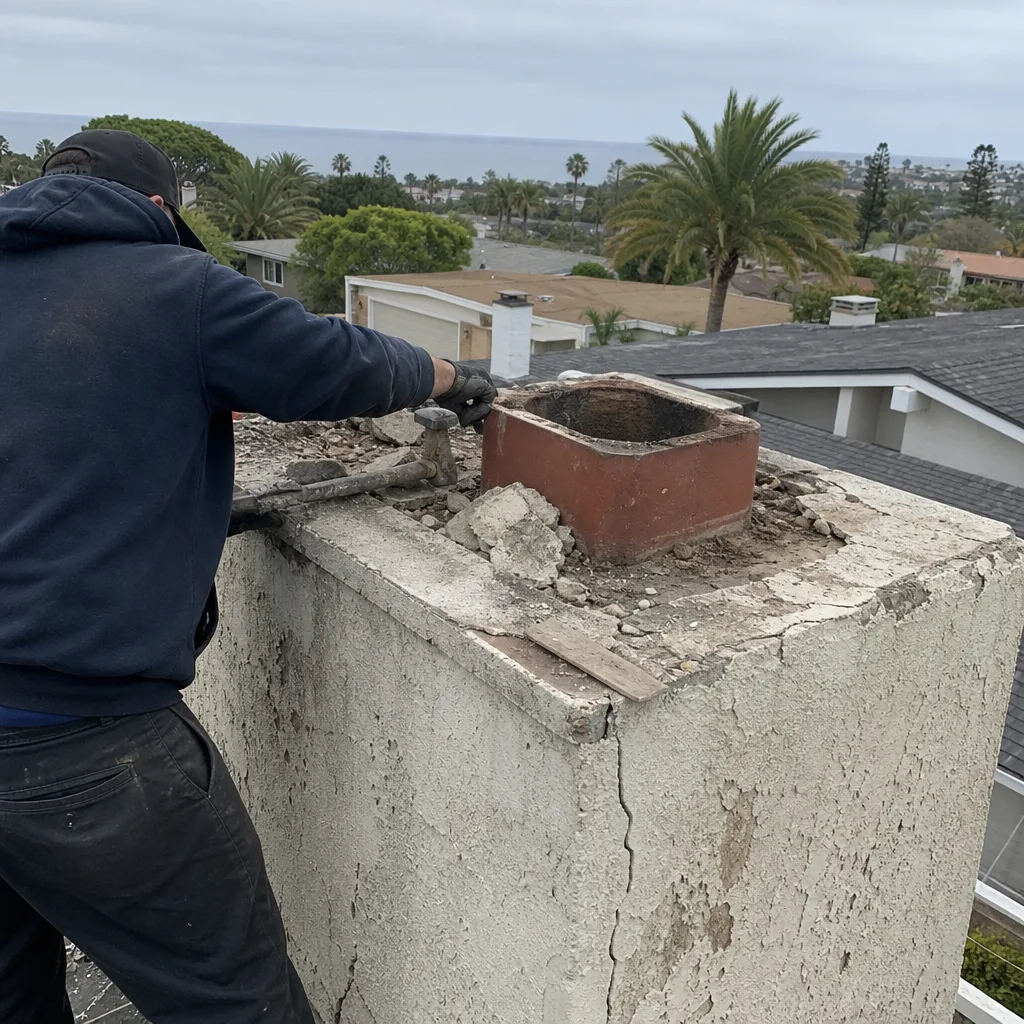 Before
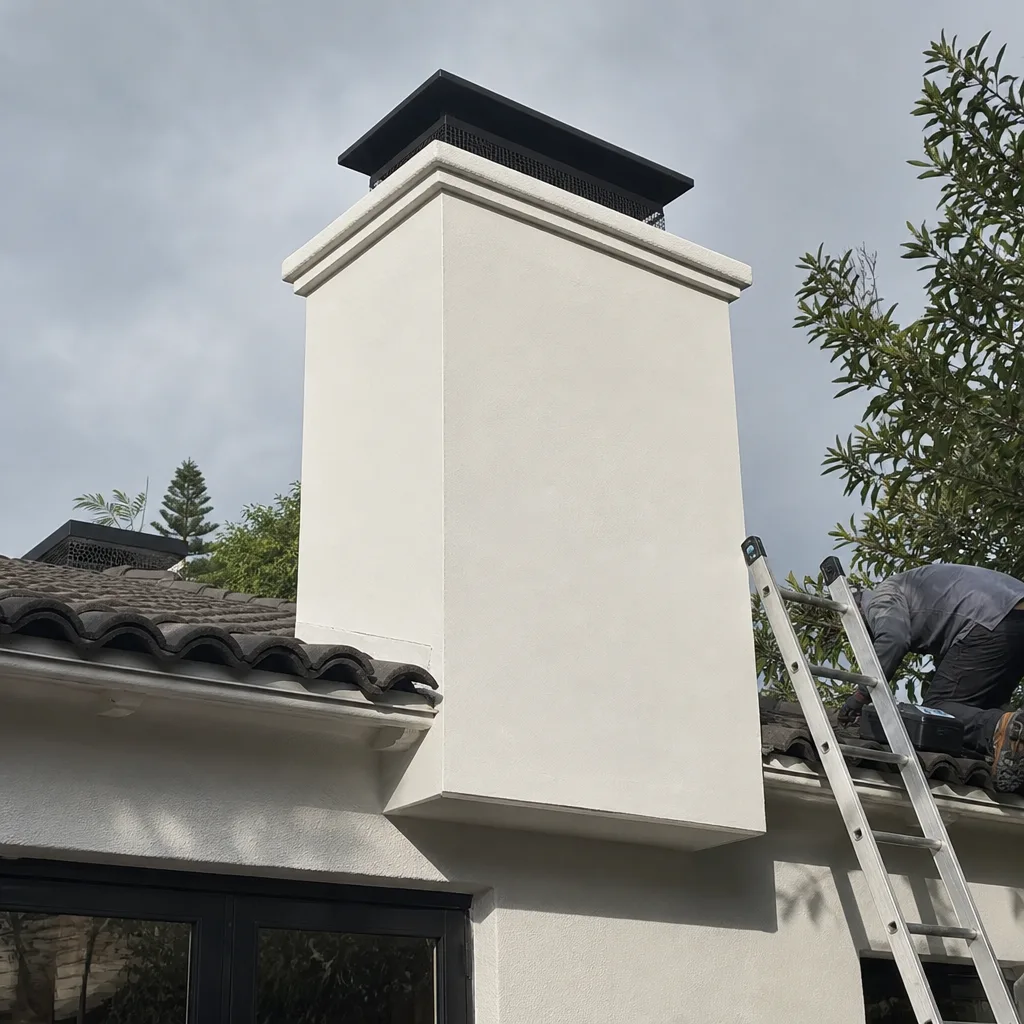 After
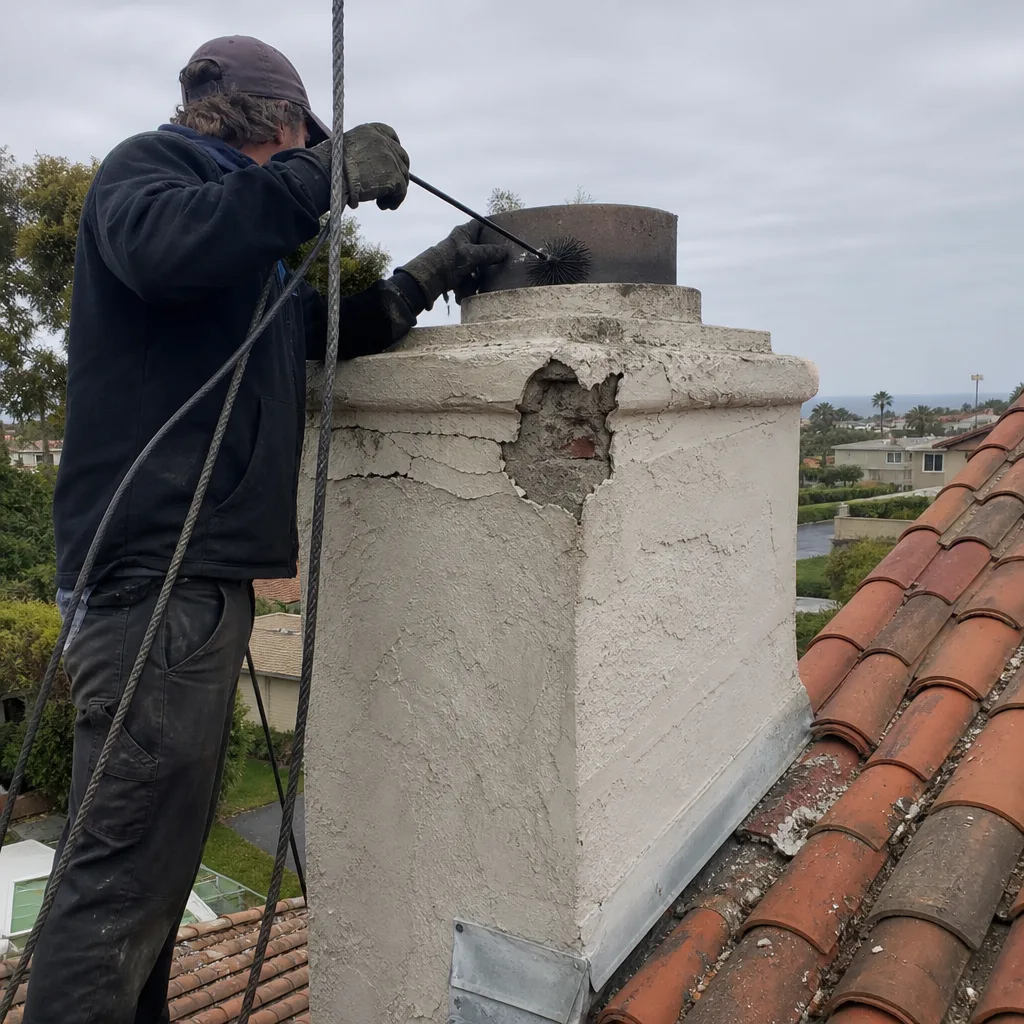 Before
 After
 Before
 After